Booklist
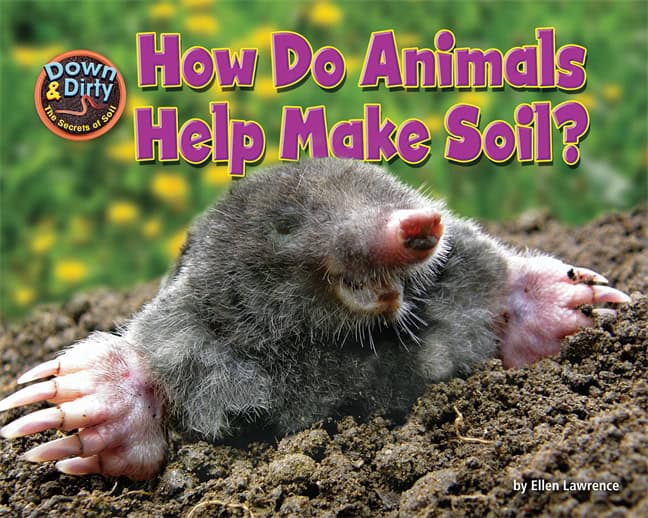
Dirty is the perfect name for a series that will have kids wanting to head outside and see some of the interesting points the books make about soil - ”what it is, how it's formed, what it's good for. How Do Animals Help Make Soil? looks at the way creatures, from earthworms to sheep, add nutrients to the soil; the work of decomposers such as dung beetles and microbes is shown as well. The books are neatly laid out, with simple text captioning the many color photographs. A good gambit is used to get kids to turn pages: each spread ends with a question. All of the books end with a sciencelab feature that offers simple experiments for budding scientists. Full of useful information, this series makes the most ordinary of substances fascinating.
NSTA Recommends
Part of the series Down & Dirty: The Secrets of Soil, this book explores that importance of animals in the formation of soil. The cycling of organic material back into the soil is the focus here. Starting with insects and worms helping to break down plant and other organic waste, the book moves on to bigger animals like wolves that are consumers that start the breaking down of larger animals into soil. We also learn about microbes that are too small to see without magnification and how they help break down organic material so that it becomes part of the soil. In the classroom the book creates high interest with clear pictures that illustrate the content. Beginning with a Table of Contents to guide the reader to the information they may be looking for, each section uses text and clearly labeled illustrations to develop key science concepts. Important words are bolded and then defined in theScience Words section using both pictures and text. There is aScience Lab section that suggests investigations that students can complete that focus on the content of the book. An index at the end of the book allows the reader to find specific places in the book where key ideas are presented. As a part of your library, this book can be used as a tool for primary age students to begin doing research for reports or projects. In addition theScience Labs section contains some great ideas for both individual and class investigations. The investigations not only focus on doing, but also on the importance in science of recording and analyzing data.