NSTA Recommends
There are fullpage color photos and facts presented in text and also in captions set off in boxes. The visuals in this book may help the struggling reader and writer access the information. There is a glossary with photos, suggested books for further reading, and a web site with links that include a link to learn more. Also, there is crossword puzzle that you can use online (or you can download it). There is also a page that has information and photos of several other [similar animals]. I would use this page for a compare/contrast activity. Although the publisher has labeled this book for grade 2 level reading, I would use this book in PreK and K classes when introducing insects and then put the book in the science center. Interest is labeled K3 and I think the book could belong in those other classrooms as well.
School Library Journal
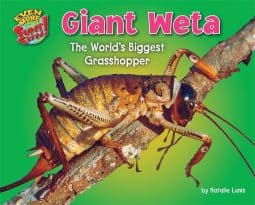
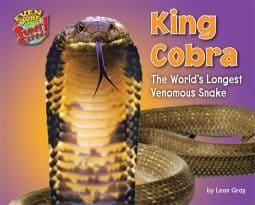
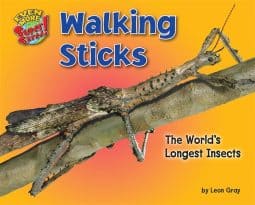
Browsers and report writers alike will enjoy this series about giant animals. Readers will learn about the featured animals' diets, defenses, habitats (all titles include a map), physical characteristics, and life cycles. The size of the creatures is compared to objects young children would know, such as soccer balls, pencils, or refrigerators. Each spread features large, vibrant, color photos that emphasize the magnitude of the animals, a few sentences of text, and text boxes outlined in coordinating borders, such as dog collars or feathers, that offer additional facts (e.g., One bite from a king cobra has enough poison to kill an elephant or 50 people). Environmental issues and pet care are addressed in some titles. Just as in Bearport's SuperSized! (2007) and More SuperSized! (2010), each book concludes with a list of related animals and a picture glossary, which will help students discover visually the meaning of new words.