Library Media Connection
Nine of the worst disasters in U.S. history are represented in this series. These are well written, presenting factual information using historic photographs and quotes from people who were directly involved. With limited text, the information is presented in an enjoyable narrative style that is easily accessible to more reluctant readers. Each book includes an online resource. The online listings lead students to quality sources such as the Smithsonian, National Geographic, and the Chicago Historical Society. The subject matter of these books makes them more applicable for slightly older students. Although written at a third grade level, the content of these books would hold the interest of older students. The series would be of particular value for struggling readers at middle and even high school level. Bibliography. Glossary. Table of Contents. Index. Recommended.
Pennsylvania Young Adult Top 40 List
This series provides an overview of important historical events... The text is informative and will interest pleasure readers and browsers. Each two page spread focuses on the chronology of the event, including causes and consequences, and color photos and captions are used to good effect. Includes profiles of people involved, a glossary and additional information, and an index.
School Library Journal
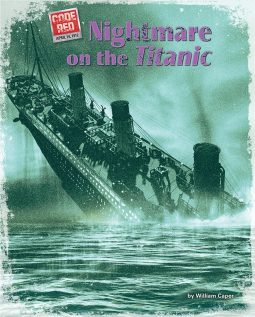
Titanic describes the 1912 collision of this unsinkable ship with an iceberg, and the resulting horror. Three Mile Island discusses the 1979 malfunction of a nuclear reactor that could have cost thousands of lives and devastated the area but, fortunately, did not. A 1911 fire in a New York City sweatshop where 146 people died because of dangerous conditions is the subject of Triangle, which also describes resulting changes in workers' rights. Texas covers the 1947 explosion of a ship loading fertilizer that set off a chain reaction in which 550 people died. The disaster might have been prevented by warning labels on the fertilizer. In each of these titles, the writing is clear and concise, and nothing is described purely for shock value; the facts are allowed to speak for themselves. The books are liberally laced with pertinent period photographs and numerous quotes from people who played significant roles in the events. Brief profiles of these figures are also provided. While none of the books actively seeks to place blame, there is also no attempt to gloss over failings. Emphasis is on the laws and policies that have been adopted to ensure that such tragedies do not reoccur. Useful additions to explain painful but important pieces of history.
School Library Journal
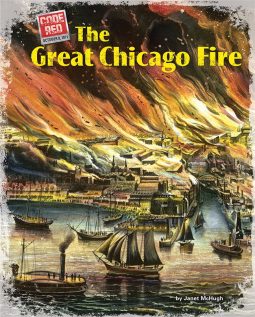
[In The Hindenburg Disaster] Feigenbaum describes the 1937 catastrophe that occurred when the hydrogenpowered airship burst into flames and crashed, killing 36 people. Highquality, historical photographs add drama and perspective. One might argue whether the picture of the partially burned survivor is necessary, but it does make the tragedy seem real. [In The Great Chicago Fire] McHugh discusses the raging fire that spread over the city in 1871, leaving a wide trail of death, destruction, and homelessness. Illustrations are mostly drawings because no photographs exist. Providing insight into the disasters, the probable causes, and the future outcomes, these wellwritten books stick to the facts and avoid sensationalism. They include a couple of largeprint paragraphs per spread, helpful features such as eyewitness quotes, sidebars with additional information, profiles of important people, a glossary, and references to print and online materials. These titles should prove popular.
The Horn Book Guide
Twelve doublepage spreads introduce each disaster, give some background, and describe reactions and changes in public policy in response to the events. While the writing never completely conveys the enormity of these catastrophes, the photographs show some of the drama. A final spread briefly profiles three or four people with roles in the events. Reading list. Bib., glos., ind.