Library Media Connection
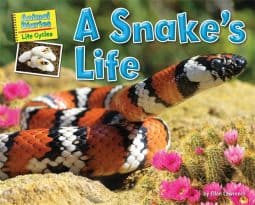
This engaging new animal series offers young readers large, bold, engaging photographs while providing information about the stages of life. Each book begins with an introduction and picture of the child and featured animal he or she is investigating. Simply written entries transcend the life cycle of such creatures as the slithering California mountain king snake. Read about how long it takes for a snake to hatch from an egg, and what precautions the mother takes to ensure its young's survival. Detailed, vividly colored photographs enhance the reader's experience as questions and other fascinating facts engage readers to investigate further. Primary and elementary students will have these books flying off the shelves as they read to learn. Bibliographical references and an index with scientific terms are provided in each book. Recommended.
NSTA Recommends
Journals and notebooks are an integral part of the educational journey today. Recording information quantitatively as well as qualitatively preserves the event on paper for future reference. In the Animal Diaries series, Ellen Lawrence models scientific recordkeeping through the eyes of a child scientist. The activities of butterflies, frogs, spiders, snakes, and kangaroos are observed and investigative questions are suggested throughout the text. Each double page spread features a dated journal entry typical of an observant student's journal, opposite full page photographs of the animal and its habitat. An inset photo of the young journalist on the first spread makes the book's premise even more personal and appealing.
School Library Journal
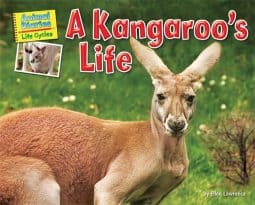
With an unusual format but conventional content, these volumes are framed as animalobservation journals from children. Several clear, bright color photos enhance each spread. Beginning with calls, egg sightings, or other indirect signs of a mating season in progress (Today I saw two red kangaroos having a fight!), each notebook tracks a typical animal's course from birth and growth to maturity...Thoughtexercise questions and study suggestions are scattered throughout the volumes, which all end with a relevant smallscale activity.
Science Books & Films
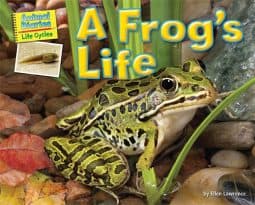
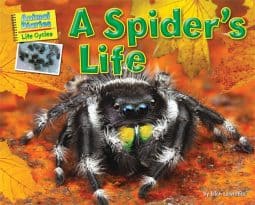
[Starred review]. Animal Diaries: Life Cycles is a marvelous series of children's books designed for the child who is sitting quietly at the pond or the one chasing the butterfly or asking where do frogs come from? This review is based on the following titles: A Spider's Life, A Frog's Life, A Kangaroo's Life, A Snake's Life, and A Butterfly's Life. All are written at an elementary level using the best learning theory to develop a story for the young inquiring mind. Each book takes an animal from egg laying or pregnancy to adulthood. The life cycle of each animal is shown with superb illustrations. For example, a picture of the actual size of a butterfly egg is shown or a series of how legs develop in pollywogs from the hind limbs to the front limbs with superb photographs. Each life cycle is filled with questions for the reader about the animal and its characteristics. For example, the adult kangaroo hops 28 feet at a time. The reader is asked to measure out some string for the person's height. Then lay out the string counting how many times it takes to make 28 feet. Can you hop that far in one hop? The series is filled with questions designed to clarify and intrigue the young reader. Each life cycle includes an illustrated list of the science words used that are clearly explained. Each life cycle has aScience Lab section that deals with intriguing questions about each animal. There is also aRead More section directing the reader to additional material as well as anOn Line section. This series is highly recommended and will be a useful science supplement for the elementary classroom, school library and children's section of the public library.
The Horn Book Guide
These easytoread books discuss the stages of development, dietary habits, and habitat of the [featured animal]. Bright, closeup photographs and kidfriendly text, presented as observations in a child's notebook, make the information accessible. Text boxes with questions and facts encourage further insight and thinking. Related activities are included in the Science Lab section.