Library Media Connection
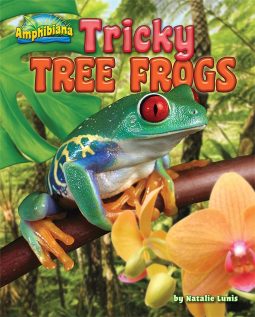
This series profiles frogs, toads, salamanders, and newts with photos, fact boxes and habitat maps. The books are captivating for various levels of elementary readers due to the richness of the photographs and the interesting facts. Each book explains the life cycle of the animal, including the threat to each in today's world. Bolded words throughout the text are found in the glossary... Recommended.
NSTA Recommends
A valuable tool for encouraging both reading and content exploration.
School Library Journal
These simply written introductions offer some basic facts about two species remarkable for their gargantuan size - “the Goliath tarantula can reach more than 11 inches in length, while the whale shark can grow to more than 40 feet and weigh up to 30 tons. Both titles are arranged in doublepage sections, each of which is geared to a different topic. In most, a halfpage of text, comprised of two to four short sentences, is paired with a sharp color closeup of the featured animal. In several sections, an additional small photo accompanies the text, usually highlighting a key anatomical feature. Each title describes a few of the chief physical and/or behavioral characteristics, habitat, diet, and lifespan, and the birth of young. Also included are sidebars, a simplified world map colored to indicate geographical range, and a onepage appendix describing a few other oversize species. The best part of both books is the photography; it is of excellent quality.
School Library Journal
This series is informative, eyecatching, well organized, and useful for reports. Readers will learn that amphibian means double life, indicating the creatures' need to live on land but near water, and that these are resilient, ancient creatures. Along with speciesspecific material, each book includes a few spreads of lifecycle information, a range map, and an indication of the subject's endangered status. Large, clear color photos depict the animals in their natural habitats. One thing this series does well is to refer to the same animals throughout. For example, the section of Water Frogs that discusses other types of amphibians features salamanders and newts, reinforcing the information found in other titles in the series, so that students who read all of the books will develop a knowledge base of a core group of amphibians. This is a great series for kids who simply want to read about a fascinating, ubiquitous family of animals.
The Horn Book Guide
This series provides introduction to frogs, toads, and other amphibians. The books emphasize the similarities among all amphibians while highlighting species' unique capabilities. Each volume conveys information about the life cycle of the title animal as well as its habitat, diet, and environmental dangers - ¦ The vivid closeup photographs are eyecatching.