Review
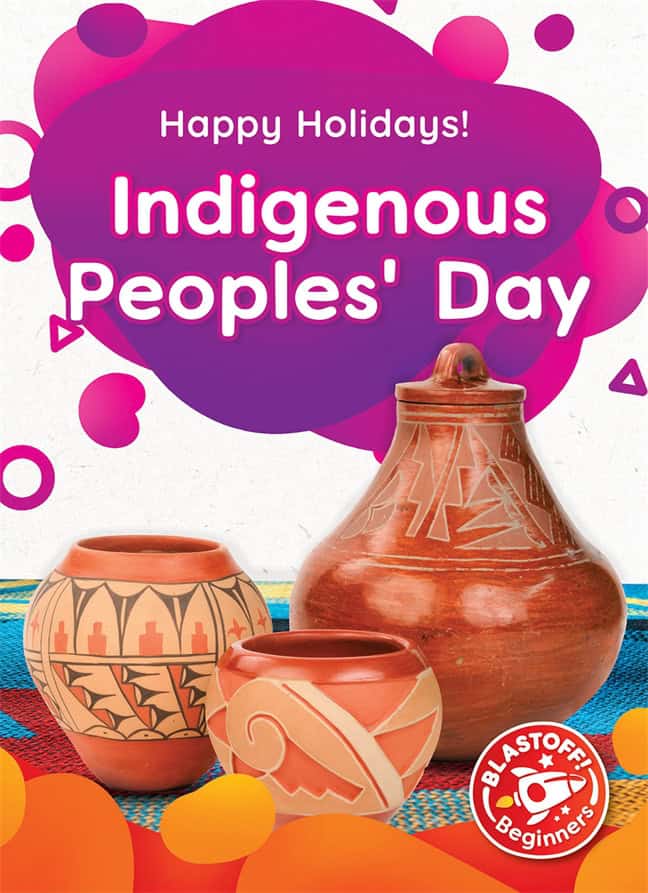
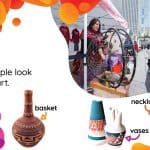
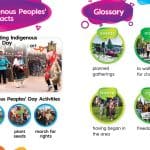
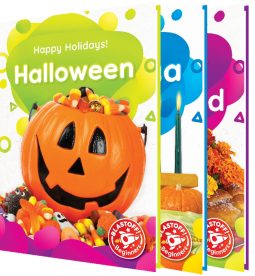
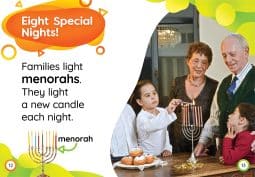
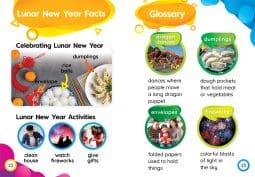
'The Blastoff! Beginners Happy Holidays series introduces children to both familiar and new holidays that will increase their understanding of the diverse culture and traditions of people in America and around the world. Each title includes information about when and why the holiday is celebrated and the traditions and activities surrounding the holiday. One of the newer holidays that is introduced is Indigenous Peoples’ Day. This holiday honors the diverse Native people of America and their way of life. This holiday is celebrated on the second Monday of October. The book explains that people learn about indigenous peoples’ culture and ways of life by reading books, making music, studying art, and various activities. Vibrant photos accompany each page with two-three simple, descriptive sentences. The high-frequency words will encourage children to learn about the holidays, practice their comprehension, and enhance their vocabulary. Each book also contains a facts page with pictures and terms that creates a summary to enhance the readers’ understanding of the holiday. Readers can use the glossary and index for easy reference and access to key terms. Each book provides a list of sight words that readers will see when reading the book. These nonfiction books are an excellent resource to help children develop an understanding of different nationalities and cultures. They will also appreciate the traditions and values that different people share while also learning about key terms (such as menorah) that may not be introduced often in other books.', Alana Jara, District Librarian, Clear Lake Community School District,'Rebecca Sabelko's Indigenous Peoples' Day fills an important gap in early reader nonfiction. For students just beginning to read independently, this book provides a clear, accessible introduction to the holiday its purpose, its traditions, and why it matters. The text is appropriately scaled for emerging readers, with simple sentences and predictable structure that support confidence while building knowledge. Rather than oversimplifying the significance of the day, Sabelko presents key information in a format young readers can navigate successfully. The vibrant photos provide visual context that reinforces the text, helping readers connect words with meaning. Two features deserve particular mention: the photo glossary, which helps build vocabulary by pairing images with terms, and the facts page, which distills key information for reinforcement. These elements demonstrate understanding of how young readers learn and what supports they need. For classrooms observing Indigenous Peoples' Day or for families wanting to introduce the holiday to young children, this book serves as an excellent starting point. A thoughtful, age-appropriate introduction to an important subject.', Alice Walstead, Alice Walstead,'Indigenous Peoples’ Day by Rebecca Sabelko is part of a Blastoff Beginners series of the Happy Holidays. This set is geared towards kindergarten, with sight words, short sentences, and bright color photographs. Each book is 24 pages and starts with the sight words for review before beginning the book content. As a parent of a kindergartner, I like that they provide a list of sight words to review before we begin reading the book together. This book includes a table of contents, headings, bolded words, glossary, index, and labeled photos – perfect for introducing a holiday to preschool through second grade and working with them on identifying non-fiction text features. Each section includes a few sentences and a photograph describing when Indigenous Peoples’ Day is (p. 6), and a variety of ways you could celebrate the holiday (p.10). This book is a good, quick overview of Indigenous Peoples’ Day. The photos show different aspects of the holiday really well, from people reading books about indigenous cultures, to celebrating the art, and their Native history. I love the Facts page (p. 22) as it summarizes the activities talked about in the book with simple photos, labels and key words. This series also includes a page referring you to Factsurfer (factsurfer.com) for additional kid friendly web sources. I liked this website and feel like it would be a great place for your beginning researchers to find online sources, or broaden their knowledge base. At the website you type in the title of your book, click the picture of the book cover that pops up, and then are given three age appropriate sites to go to for more information. I find these Blastoff Beginners a go-to in my library because I know I can count on them for their eye-catching covers and photos, their quality, and their consistency in content and readability. If you need books for primary students about holidays or books that provide a simple to understand overview of a holiday, I recommend adding this book to your library collection.', Katy Beattie, South Sound Book Review Council, Washington,'As more schools and governments recognize Indigenous Peoples’ Day in October, children may wonder what this day celebrates. In this book from the Happy Holidays! series (12 titles), Sabelko answers these questions in very broad strokes. Regrettably, the spare text—one or two short sentences per double-page spread—doesn’t lend itself to much depth or detail, making the day’s events feel overly simplified. Some examples include, “People look at art,” “People plant seeds. They help the land,” and “People march. They fight for Native rights.” Fortunately, the well-chosen photos may help spark more interest and curiosity. These photographs colorfully illustrate what Native American people, art, seed-planting, protests, and customs look like today, rather than in a stereotypical past. A basic but still-needed introduction to Indigenous Peoples’ Day for beginning readers.', Miriam Aronin, Booklist