Review
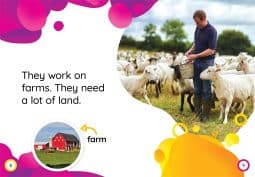
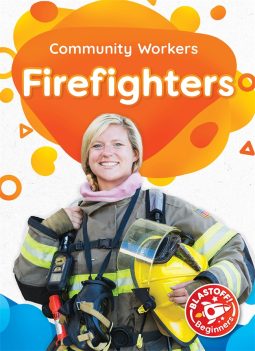
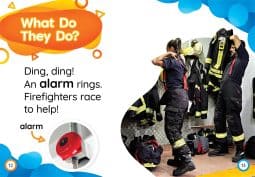
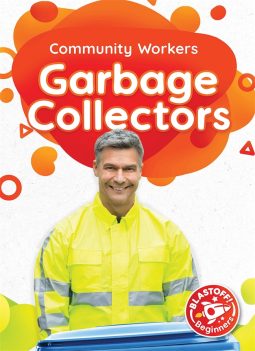
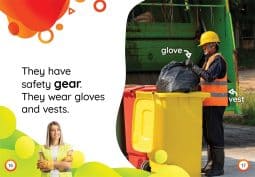
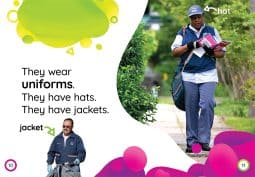
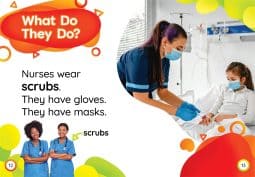
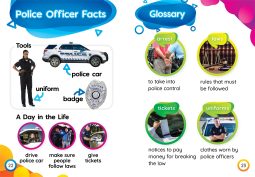
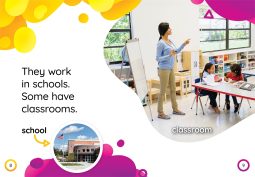
'In this series, the reader learns about community helpers, or jobs, in our communities. Each book begins with a table of contents with subjects of why communities need this job, what the community helper does, and facts about his/her job. To support the emerging reader, the print on each page is large and the author limits the page to 1-2 sentences. The photographs in these books are extremely useful in understanding the community helpers’ duties. Near the end of each book, are facts detailing the job with small photographs and labels to support the reader. My students love these books because of the engaging photographs and large text! These non-fiction books include numerous non-fiction text features to support the reader in understanding the important facts in the book. Some non-fiction text features included in each book are engaging photographs, a table of contents, labels, headings, bold-faced words, a picture glossary, and an index. These books also use common sight words and these sight words are listed at the beginning of each book. These books are a dream come true for research projects in classrooms! Also, because they are all aligned the same way, a teacher can teach non-fiction text features while students use these books to find those non-fiction text features. Check out these books to learn all about the helpers in your community!', Charity Nadrozny, 2nd Grade Teacher, Illinois, Educator Review,'Having the opportunity to receive quality non-fiction books for early readers is always appreciated in the elementary library. These titles are six of sixteen in the Bellwether Blastoff! Beginners: Community Workers Series. Since primary (kindergarten-1st Grade) students focus on community members and their professions, these books can be a benefit for the classroom as well. Each of these books start with sight words that students will need in order to clearly understand the content. The Table of Contents/Chapters are clear, concise and consistently the same in each of the books and thus, are helpful for basic research questions to be answered by students. There are a minimal words on each page as well as vibrant images for clearer understanding and higher interest. The end of the book also has basic facts and a glossary for further comprehension. The final page also has an index as well as web information on how to get more information at a lower reading level. I would highly recommend these books for any library that provides informational books for primary leveled readers.', Midge Livingtson, South Sound Book Review Council, Washington