School Library Journal
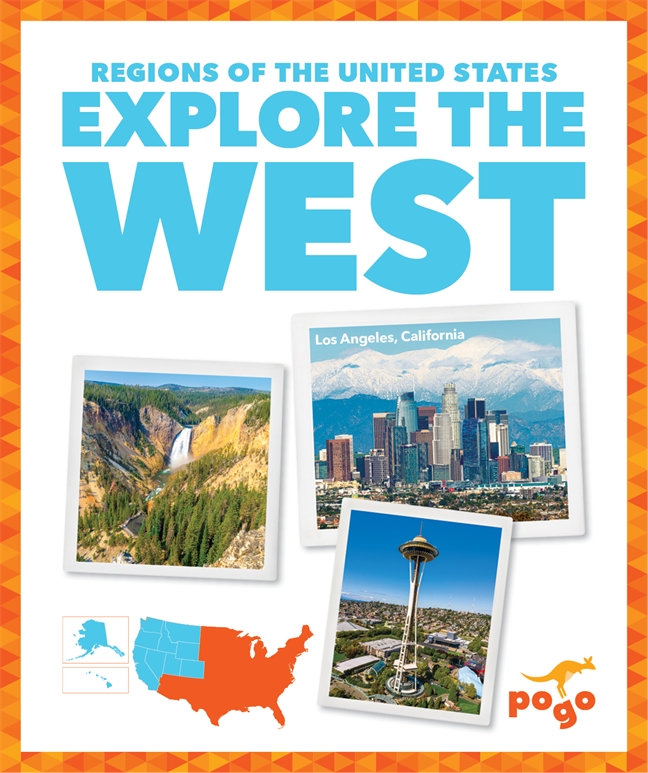
The U.S. is vast and varied, and here readers are offered a succinct snapshot of the American West. The book opens with a rapid historical overview that touches on the West’s original Indigenous inhabitants, the Louisiana Purchase, the Lewis and Clark expedition, and California Gold Rush. Accompanying vintage illustrations and a modern map labeling the region’s states aid readers’ understanding of the area. The second chapter, “Geography and Wildlife,” uses photos to great effect as it tours impressive landforms (Yellowstone’s hot springs and geysers, Utah’s Great Salt Lake, etc.) and some of the region’s iconic animals. The final chapter highlights a few major cities, employing an infographic for each western state’s top industries. An almanac-like chart of statistics brings this volume of the Regions of the United States series to a close.', Julia Smith, Booklist,'A short series about the various regions of the United States. The books open with ideas for educators and caregivers for before, during, and after reading followed by a table of contents with three to four chapters of varying lengths. Each region’s history, location, geography, wildlife, and daily life are describe in a short paragraph on a colorblock, bold vocabulary, and corresponding with a captioned picture. Info bubbles appear throughout the text with fun facts and questions for readers to ask themselves, such as “Do you know what plants grow near you?”. An infographic is used at the end of each title to show the popular industries from each state. The back matter has a quick facts page, glossary, an index, and how to learn more. There is enough information to introduce the states of each region for elementary readers, although some of the color blocks take up a large portion of the page, cutting off pictures in odd places. VERDICT A good introduction to the regions of the United States for elementary readers.